My entire career trajectory over the last decade has been a healthy dose of optimism, learning on the fly and advocating for myself. Every job flowed so seamlessly into the next, I was never sure if I actively chose this path or if I wandered into it. What I do know is that at every point along the way, I threw myself into the deep end and taught myself the nuances of the job.
Video producer? Me?
Let me start off by saying, I never had plans to get into video production.
When I lived in New Zealand for a year, I worked at a healthcare office. The manager tasked me with creating instructional videos for their clients on how to use their healthcare app. It was the New Zealand version of Jane app. Having never made a video, and with no access to any video software of the sort, I got my first taste of “figure it the f*%k out”.
So there I was, stitching stock videos with screenshots and adding a tinny voiceover I recorded with my 2015 iPhone. Looking back, I see this was the start of my tech writing career.
Cut to 2017 and I’m back in Canada working remotely at Shopify as a Guru. I was on phones, chats and emails every day, answering questions from real merchants. It gave me a first-hand look at what people were asking, where the Shopify resources were and, most importantly, what those resources didn’t answer. Was something unclear? Was it out of date? Was the feature not documented? Why? These were questions I started asking tech writers directly, which is where I started to develop my relationship with the team.
When a position opened up on the docs team for instructional video, I applied for it. I figured my New Zealand videos counted as something like experience. Truthfully, I was not qualified. But I was eager and willing to put in the work, so they gave me a shot.
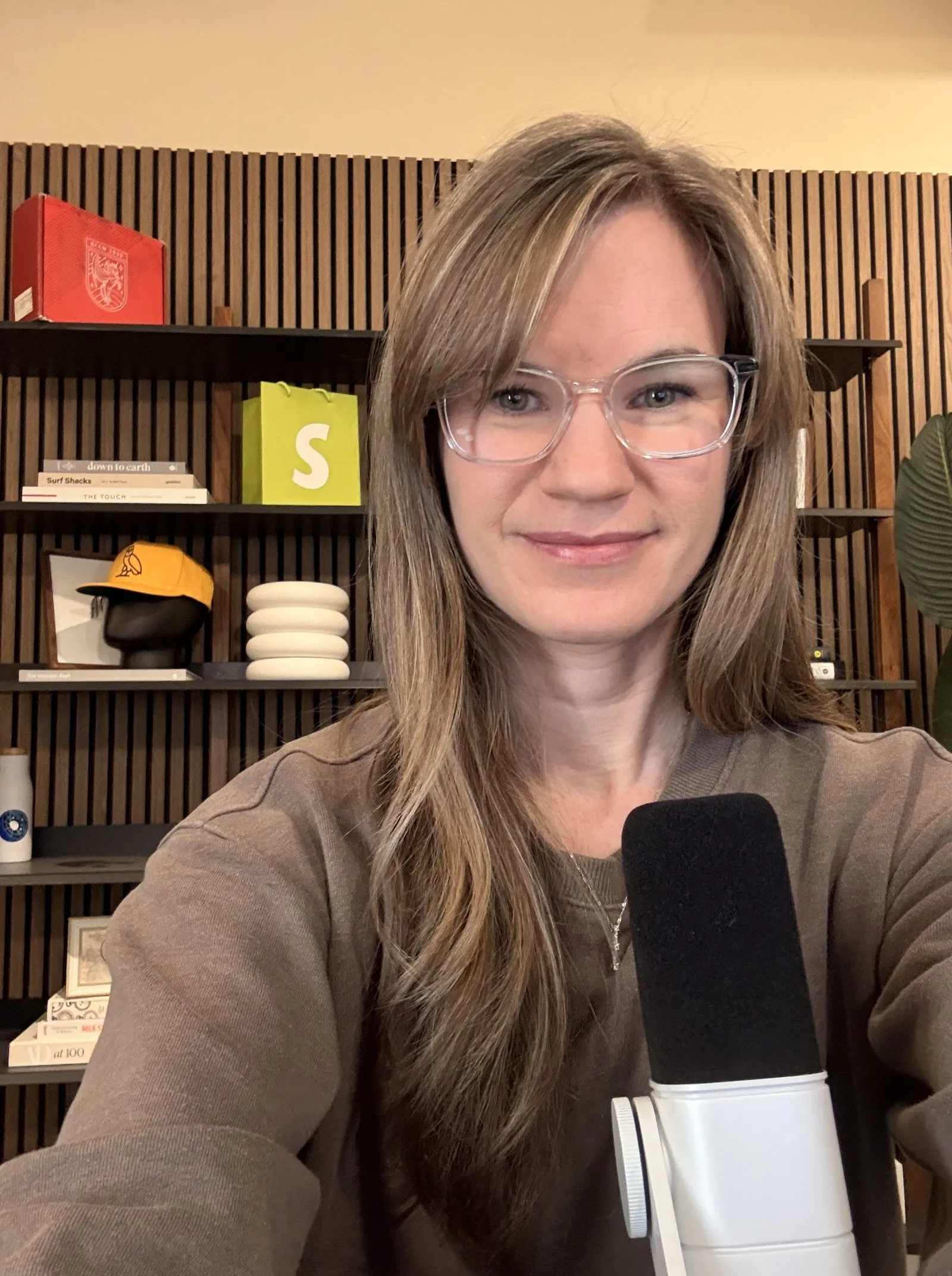
The job started as simple screen recordings with voiceover laid on top. Even though the job was to create instructional videos, the actual job was writing the scripts. A video meant nothing if the information wasn’t accurate. Sure, there were docs for me to validate against, but writing for a different medium involved an entirely different type of writing. I started learning technical writing without ever realizing it.
Who was my audience?
Where they live, what their goals are and whether they have access to these features.
What skillset did they have?
Are they brand new to the platform? Do they need terms explained, or do I write as though they already have expert knowledge?
How much information belongs here?
Is this too much detail for a single video? Am I going down a rabbit hole? Is this an overview script or an instructional one? Where did the docs end and video begin?
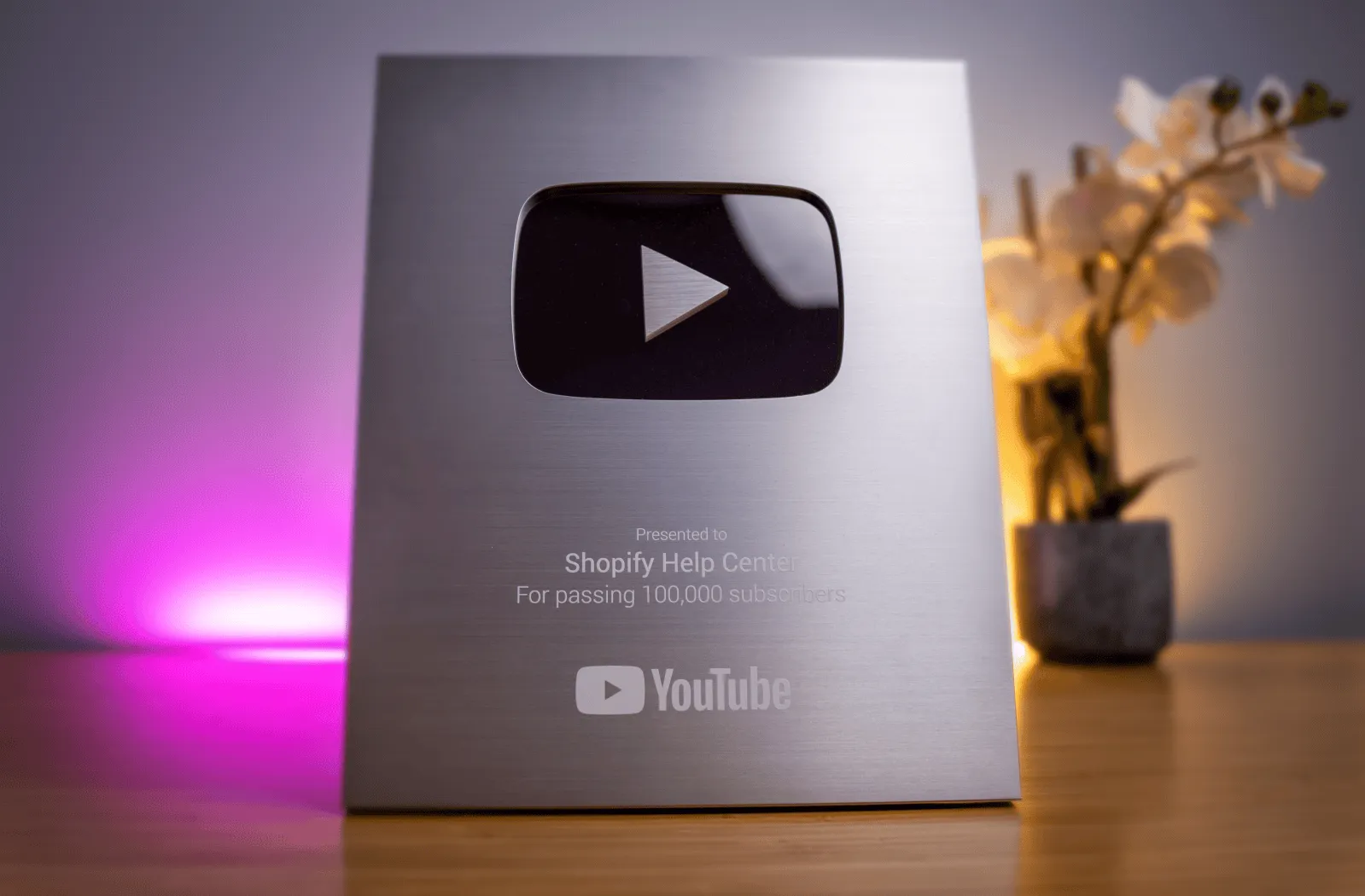
Between working with subject matter experts, SMEs, to develop content, testing the product, writing the script, validating it, using Docs as Code to embed videos in the site, localizing and reading the data, I was a tech writer…with a camera. I grew my single-person screen recordings into a team of 11 that I managed, while expanding into 14 languages globally. I was known as the Shopify YouTube lady because that’s what got shared with our merchants in the same support calls I used to take myself.
Then, we restructured.
Speak to the enterprise
Bye bye YouTube, hello Academy. The restructuring moved me away from my YouTube channel and the merchants I knew best. I no longer created content for people starting local businesses. I built content for Partners and Enterprises.
The move into Shopify Academy changed the audience but also the unit of work. A how-to video answers a few questions for someone who already knows they have it. A course has to decide what someone knows by module three, what they need before module four makes sense and which of the twenty things I could teach them actually belong in a sequence that ends with them able to do something. Leadership set the priorities, and courses lined up with the products the business needed to grow. The restructuring had moved me out of support, where I focused on deflection metrics, and into Revenue, where it was time to bring in money.
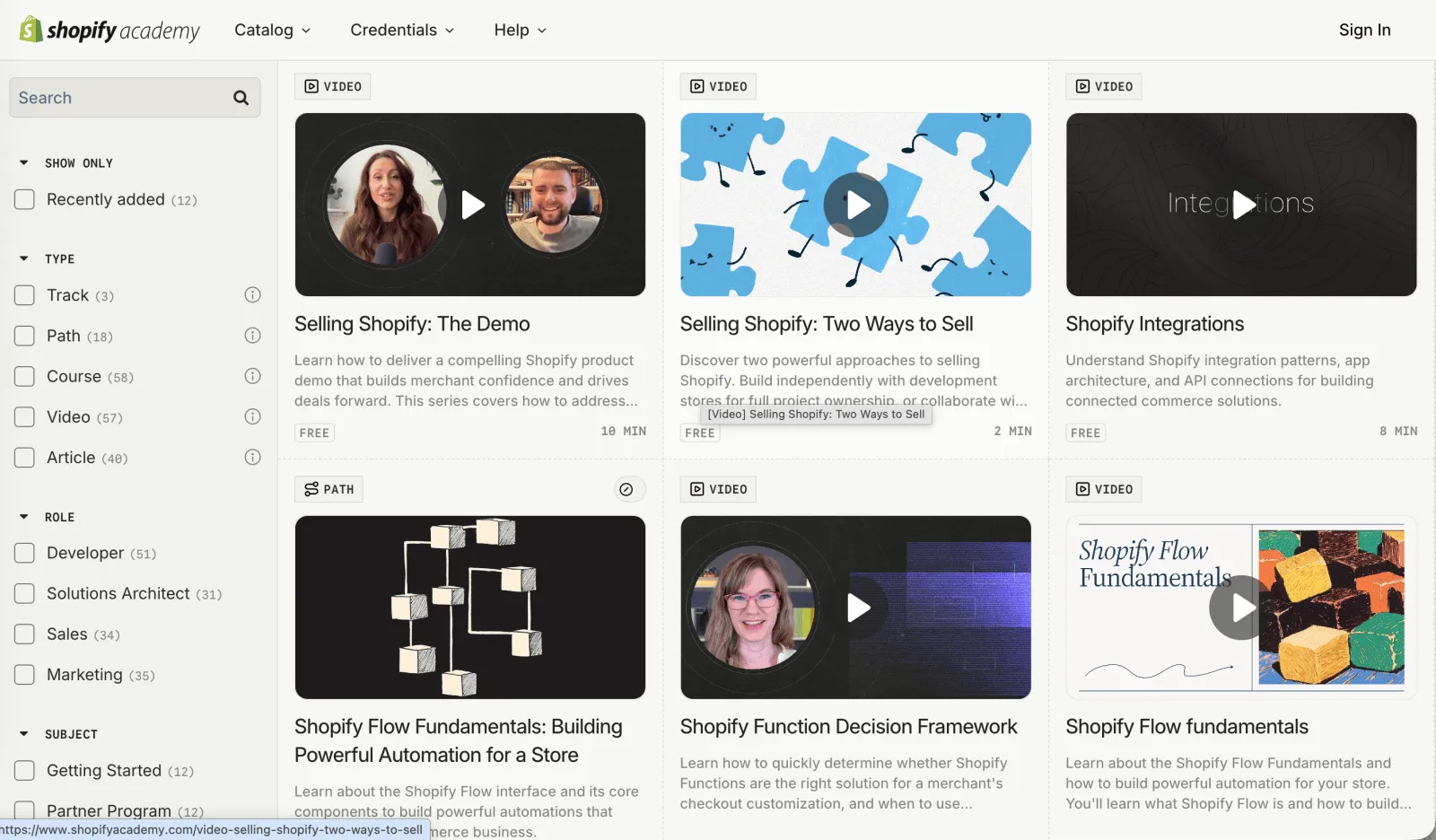
That change in audience and medium was harder than I expected, and it was the first time I had to think about structure as a separate skill from writing. I was working with Instructional Designers and Program Managers on certification tracks, and they had vocabulary for decisions I had been making by feel for years. Frameworks like Diátaxis draw the same distinction I had been feeling my way toward. Separating a tutorial that teaches a beginner from a how-to guide that answers a specific question for somebody who already knows what they need. Seeing it set out plainly was more useful than I expected. Learning that sequencing and prerequisites were a discipline with rules, rather than an instinct I happened to have, is a large part of why I eventually enrolled in a technical writing program at Algonquin College.
Enrolling in school was a way to reconnect with the team I had been pulled from. It was also a way to formalize everything I’d picked up by trial and error so I could be a stronger writer, but now with the video aspect stripped out.
It was around this time that Shopify went all in on AI, and I was catapulted into a new world of tech and what technical writing meant.
Then, we got laid off.
What’s a release note anyways?
The idea of starting over somewhere after a decade was intimidating, to say the least. But I was also more than ready. I was ready to move forward and shift into a role that was fully technical writing. Not writing adjacent. The technical writing program is what helped push me forward in my career, putting a certificate on what I had already learned.
Then I joined Netomi, a startup with fewer than 250 people. A far cry from the 10k+ I had just left. The source material changed completely. The audience, vastly different. The software? I’d never touched it before. But again, I knew my capabilities and I already knew that technical writing was transferable. I sold myself on the strength of the systems I had learned to build. At Shopify, technical writing evolved from writer to builder. I wasn’t only writing for the platform, I was building the platform as I pushed content out at the same time.
We’re flying the plane as we’re building it.
– Shopifolk everywhere.
That’s what I brought to Netomi. The pitch for changing their release note process is what got me the job. Then I joined and built it. Did I have experience writing release notes? Not really, not to this level of technicality. But that’s what being a technical writer is. Learn the audience, put the time in with the subject matter experts, learn the product and get hands-on every single day. Much of what I do is invisible but necessary. People don’t notice when docs are done right, because it’s a flawless experience, but man do they notice when they’re wrong.
This is the stage I never saw coming. Nine years ago I could not have told you what a release note was, much less translated engineering API and backend discussions into something an everyday user can understand.
The through line
Looking back, each stage taught something the next one needed, which is easier to see now than it was at the time. Video taught me that I have to do the task before I can describe it, and that has never stopped being true. Academy taught me that structure and sequence are decisions rather than accidents, and that a reader’s path through a set of content matters as much as any single piece of it. Release notes taught me vicious triage, and brought a whole new meaning to translation.
The through line is that all three jobs are the same act. Find out what someone is trying to do, find out what is actually true and close the distance between the two. The medium changed three times and the delivery format changed with it, but I have been doing one thing since 2017 and it took me most of that time to notice.